 Kudosky
People Analytics: How Data-Driven HR Transforms Employee Engagement
September 29, 2026
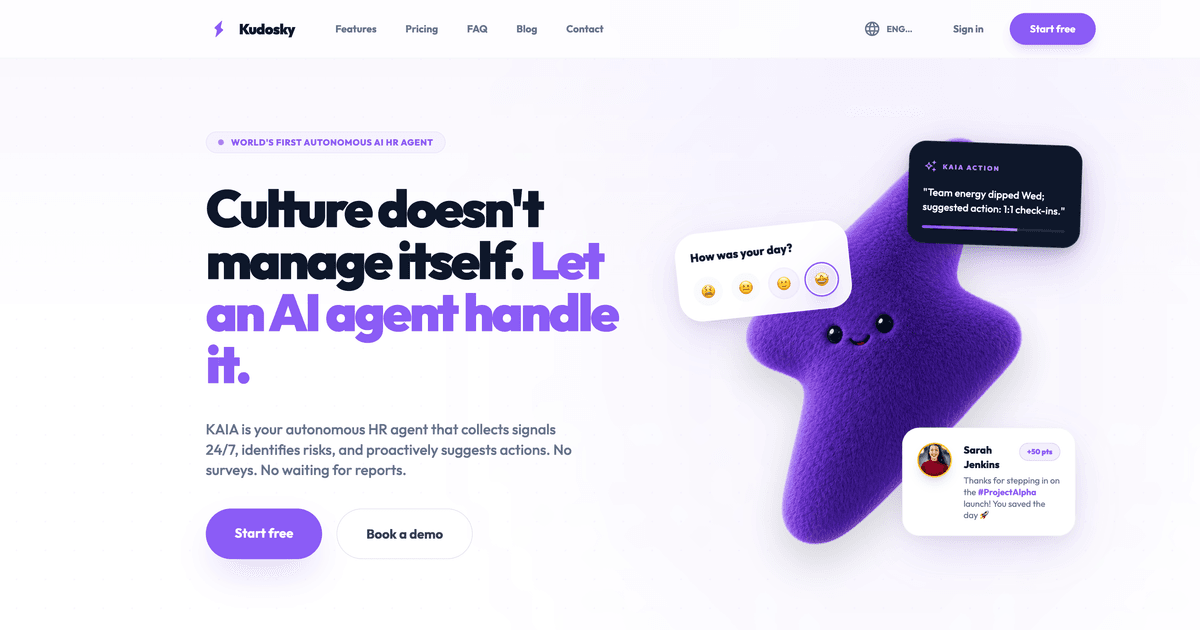
For decades, HR decisions were made on intuition, tradition, and anecdote. "We have always done it this way" was a sufficient explanation. But the companies that attract and retain the best talent today are not guessing -- they are measuring. People analytics has moved from a buzzword to a competitive necessity, giving HR leaders real insight into what drives performance, engagement, and retention.
What Is People Analytics?
People analytics (also called HR analytics or workforce analytics) is the practice of using data about your workforce to make better decisions. It goes beyond simple headcount reporting -- it connects dots between employee behaviour, engagement, performance, and business outcomes.
Think of it as the difference between knowing your employee turnover rate is 18% and understanding why it is 18%, who is most at risk of leaving, and what you can do about it before those people walk out the door.
Why People Analytics Matters More Than Ever
The modern workplace generates an enormous amount of data: survey responses, performance reviews, absenteeism patterns, recognition activity, collaboration data, onboarding completion rates. Most companies sit on this data without ever connecting it into insights.
The cost of ignoring it is high. Studies consistently show that replacing an employee costs 50-200% of their annual salary. Poor engagement leads to lower productivity, higher absenteeism, and more errors. People analytics gives you the early warning system that prevents these problems -- or at least helps you respond to them faster.
Key Metrics Every HR Team Should Track
Not all data is equally valuable. Here are the metrics that tend to have the strongest relationship with engagement and retention:
- Employee Net Promoter Score (eNPS): Would your employees recommend working here to a friend? eNPS gives you a simple, trackable measure of loyalty and advocacy.
- Engagement score trends: Track scores over time, not just in annual snapshots. A declining trend is often more important than an absolute number.
- Voluntary turnover by team and tenure: Who is leaving, when, and from where? Patterns reveal problem areas that raw numbers hide.
- Time-to-productivity for new hires: How quickly are new employees becoming effective contributors? Slow onboarding often signals deeper cultural or process issues.
- Manager effectiveness scores: Aggregate feedback on managers correlates strongly with team engagement and attrition.
- Recognition activity rates: Teams where peer recognition is active tend to show higher engagement scores -- a leading indicator before problems emerge.
- Absenteeism patterns: Short-term unplanned absence often predicts disengagement or burnout before it becomes visible in surveys.
From Data to Action: How to Build a People Analytics Practice
Collecting data is the easy part. The real value comes from turning it into decisions. Here is how to start:
1. Define the questions you need to answer. Do not start with data -- start with business questions. "Why are we losing engineers in their second year?" is a better starting point than "let us collect more data."
2. Connect your data sources. HRIS data, engagement survey results, performance review scores, and recognition activity often live in separate systems. Look for correlations: do teams with high recognition activity also have lower attrition?
3. Segment your insights. Company-wide averages hide the story. Break down engagement data by department, tenure, location, and manager. A company with a 70% engagement score might have one team at 90% and another at 40%.
4. Build regular review cycles. Monthly or quarterly reviews of key metrics create the feedback loops that annual surveys miss.
5. Share findings with managers. Analytics only drives change when it reaches decision-makers. Give team leaders their own data dashboards -- and train them on how to interpret and act on what they see.
The Privacy Question
People analytics raises legitimate privacy concerns, and it is important to address them directly. Employees are right to ask how their data is being used. The best-practice approach is:
- Be transparent about what data you collect and why.
- Anonymise individual-level data wherever possible -- team-level insights are usually more actionable anyway.
- Use data to help people, not to monitor or penalise them.
A culture of trust and a strong analytics practice are not opposites -- they reinforce each other. When employees see that data leads to better support, more recognition, and genuine improvements, they engage more honestly in surveys and feedback tools.
Where Recognition Fits In
One of the most powerful -- and underused -- data sources in people analytics is recognition activity. Platforms like Kudosky give you visibility into patterns of peer-to-peer recognition across your organisation. Who is recognising whom? Which values are being celebrated? Which teams have low recognition activity?
These patterns are early indicators of culture health, team cohesion, and manager behaviour -- all before traditional engagement surveys pick them up. Combining recognition data with eNPS scores, engagement trends, and turnover patterns gives HR teams one of the most complete pictures of workforce health available.
Your Next Step
People analytics does not require a team of data scientists or a six-figure software investment. It starts with choosing the right questions, gathering the right signals, and committing to act on what you learn. Kudosky helps HR teams track recognition activity, run pulse surveys, and connect engagement signals into actionable insights.
Ready to stop guessing and start measuring? Start your free trial or book a 30-minute demo -- we would love to show you how.
Make the good work visible.
Recognition that fits the day your team already has: colleague to colleague, in Slack and Teams.