 Kudosky
Values-Based Recognition: How to Connect Employee Achievements to Your Company's Core Values
November 3, 2026
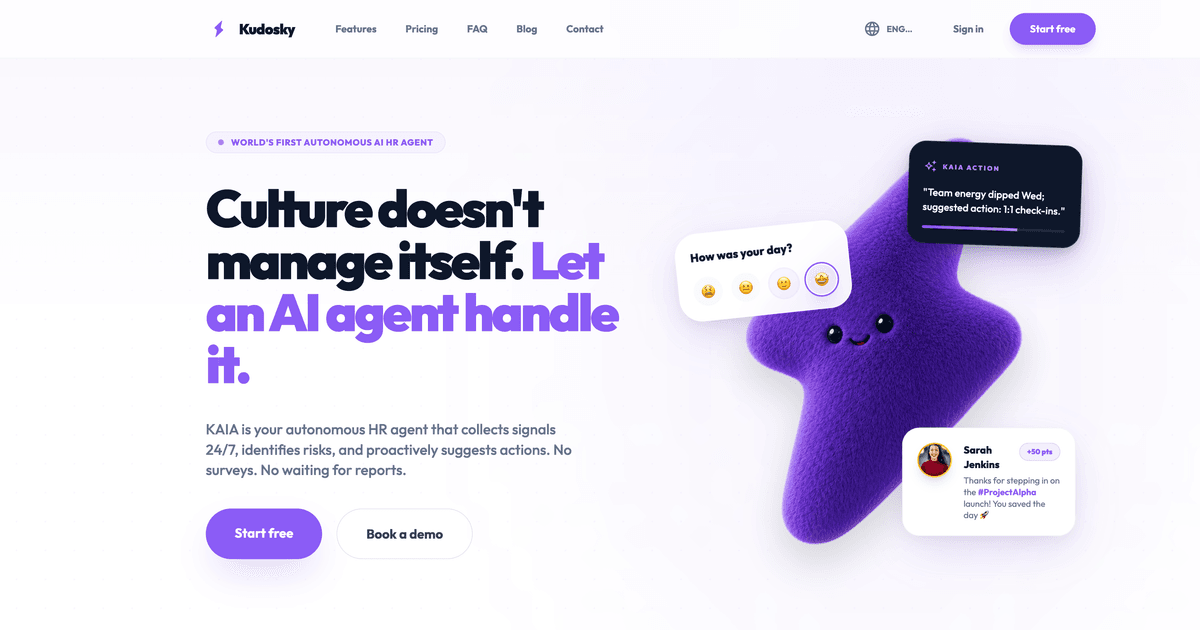
When employees receive recognition, what are they actually being celebrated for? In too many organizations, kudos flow for hitting targets or completing projects—without any connection to the principles that define the company's culture. Values-based recognition changes that: it ties every acknowledgment to the specific behaviors and beliefs your organization stands for, turning scattered praise into a powerful cultural force.
What Is Values-Based Recognition?
Values-based recognition is a structured approach where each piece of praise is linked to one or more of the company's stated core values. When a colleague receives kudos, the recognition notes which value they demonstrated—turning an abstract principle into a visible, celebrated behavior. Over time this creates a real-time cultural map: which values appear most often, which teams embody them, and where cultural gaps quietly exist.
The Gap Between Values and Culture
Research consistently shows that most employees cannot explain how their daily work connects to company values. A Gallup study found that fewer than one in three employees strongly agree they know what their company stands for. When recognition focuses only on outputs—what was achieved, not how—the values on the wall remain theoretical. Values-based recognition closes this gap: every kudos becomes a data point saying 'this behavior, this way of working, is exactly what we want more of.'
Key Benefits for Organizations
- Stronger cultural alignment. Employees internalize what 'good' looks like beyond metrics when recognition consistently references specific values and behaviors.
- Richer cultural health data. Values-tagged recognition creates a real-time dataset. HR leaders can see which values are thriving and which feel aspirational—a far richer signal than an annual survey.
- More meaningful recognition. 'You demonstrated our Ownership value by catching that risk early' is more memorable and identity-anchoring than a generic 'great job this week.'
- Faster cultural onboarding. New hires absorb culture faster when they see values in action through peer recognition, rather than reading about them in a handbook.
- Manager accountability. If certain values rarely appear in a team's recognition data, it prompts managers to examine how well they themselves model those values.
How to Implement Values-Based Recognition in 5 Steps
- Audit your values for behavioral specificity. 'Excellence' is too vague. 'We pursue excellence by proactively surfacing problems before they escalate' gives employees something observable to act on.
- Build value tags into your recognition platform. Tools like Kudosky let employees select which company value their kudos relates to when sending recognition—a two-second step that creates powerful analytics.
- Train managers to model values-linked praise. If leaders only recognize output, employees will follow. Run short workshops where managers practice giving feedback that names the behavior and the value it represents.
- Report on values visibility, not just volume. Monthly reports on which values appear by team reveal where culture is thriving and where it needs attention—before it becomes a retention issue.
- Close the loop with leadership. Share values-recognition insights in leadership reviews. When executives see data trends, they can intervene before a cultural drift becomes a crisis.
Common Pitfalls to Avoid
- Too many values. If employees choose from 12 values, they pick randomly. Keep it to 4–6 values, each clearly defined in behavioral terms.
- Mandating specific values. Let the data surprise you. Requiring recognition to always include a particular value corrupts your cultural dataset.
- Ignoring the results. Collecting values data without acting on it breeds cynicism. Even a quarterly 'here's what our values data showed us' email from leadership makes employees feel heard.
How Kudosky Enables Values-Based Recognition
Kudosky's peer recognition platform makes values-based recognition effortless. When employees send kudos to a colleague, they select which company value their recognition celebrates—making values a natural part of every interaction, not an administrative checkbox. HR leaders get a real-time dashboard showing which values are thriving across teams, departments, and time periods, turning recognition data into a continuous, living culture audit.
Start Building a Recognition Culture That Reflects Your Values
Your company values are only as powerful as the behaviors they inspire. Values-based recognition turns every 'thank you' into a cultural signal—reinforcing what great looks like, day after day. Start your free Kudosky trial at kudosky.app/auth/signup, or book a 30-minute culture alignment call at calendly.com/hello-kudosky/kudosky.
Make the good work visible.
Recognition that fits the day your team already has: colleague to colleague, in Slack and Teams.