
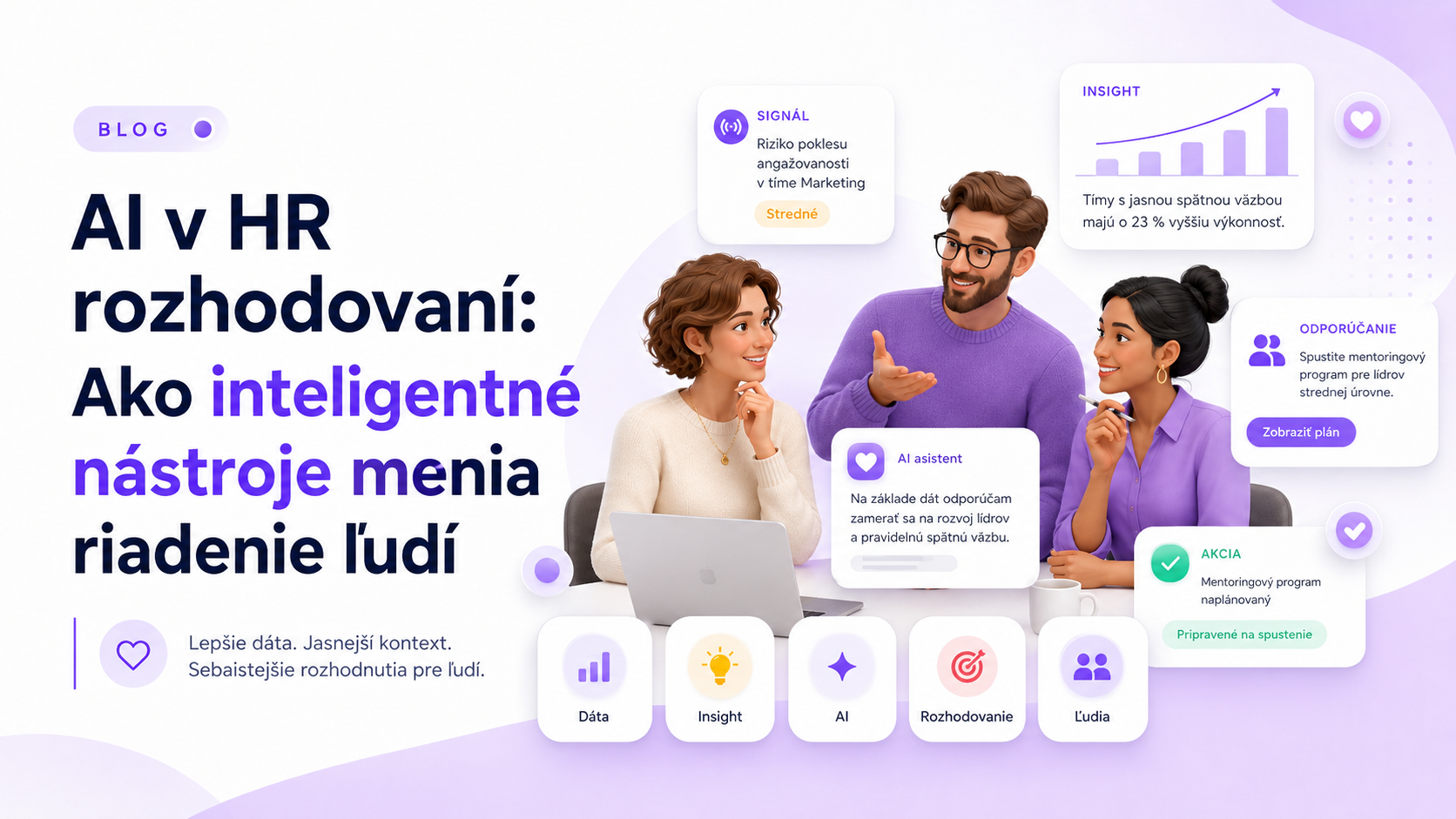
AI in HR Decision-Making: How Smart Tools Are Transforming People Management
June 23, 2026
For years, HR decisions were made on gut feeling, annual surveys, and quarterly reviews. Today, artificial intelligence is changing the game — not by replacing human judgment, but by giving HR professionals the data and insights they need to make smarter, faster, and fairer decisions. From predicting burnout to surfacing recognition patterns, AI is quietly transforming how companies lead their people.
The Data Problem in HR
HR leaders have always dealt with people data — headcount, turnover rates, engagement scores — but turning that data into action has been a persistent challenge. Traditional methods rely on lagging indicators: you notice a problem (high attrition, low morale) only after it has already taken root. AI flips this dynamic by identifying patterns in real time, often before a problem becomes visible to the naked eye.
Think of it as the difference between a thermometer and a weather forecast. Legacy HR tools tell you the temperature right now; AI-powered platforms predict a storm before it arrives. The shift from reactive to proactive people management is one of the most important transitions HR is making right now.
What AI Actually Brings to the Table
Modern AI HR tools offer a range of capabilities that go far beyond simple automation. Here are the areas where they create the most value:
- Predictive analytics: Identify employees at risk of disengagement or departure weeks or months before they make a decision.
- Sentiment analysis: Parse feedback, pulse surveys, and communication patterns to gauge team morale in near real-time.
- Recognition intelligence: Spot gaps in recognition — who is giving kudos, who is receiving them, and who is being overlooked entirely.
- Manager coaching: Flag managers who may be struggling with communication or team engagement and suggest targeted interventions.
- Bias reduction: Reduce the influence of unconscious bias in promotion, pay, and performance decisions by anchoring them in objective data.
Real Use Cases in Action
Across industries, companies are already putting AI to work in HR. Here are some of the most impactful applications:
- Proactive retention: AI monitors engagement signals and flags employees showing signs of disengagement — fewer peer interactions, reduced participation — prompting a timely manager check-in.
- Fair performance reviews: Instead of relying on a manager's memory, AI surfaces a full record of contributions, project completions, and peer feedback — making reviews richer and fairer.
- Onboarding acceleration: AI tools track how new hires progress through their first 90 days, identifying where they need support before they fall through the cracks.
- Culture health monitoring: Rather than waiting for an annual engagement survey, AI monitors continuous feedback channels and flags shifts in team sentiment week over week.
The Human Element Still Matters
One common fear is that AI will depersonalize HR — turning people into data points and reducing complex human situations to algorithms. The reality is quite different. The best AI HR tools are designed not to make decisions for managers, but to support them.
AI surfaces the signal; humans still do the listening. An algorithm can flag that a team member seems disengaged, but only a manager can have the meaningful conversation that follows. AI can identify a pattern of underrecognition, but only a team leader can build the habit of saying 'thank you' in a way that truly lands. The most successful organizations use AI to amplify human judgment, not replace it.
Getting Started with AI in Your HR Stack
If you're ready to bring AI into your HR processes, here's a practical starting point:
- Audit your current data: AI is only as good as the data you feed it. Ensure consistent collection of engagement signals — pulse surveys, recognition activity, feedback responses.
- Start with one use case: Don't overhaul everything at once. Pick one pain point — burnout risk or recognition gaps — and find a focused tool that addresses it.
- Involve your managers: The people who will act on AI insights are your managers. Get their buy-in early and make sure the outputs are actionable and easy to understand.
- Choose ethical tools: Look for platforms that are transparent about their models, allow human override, and respect employee privacy. Avoid black-box solutions.
- Measure and iterate: Set baseline metrics before you start, then review regularly to see what's improving and what needs adjustment.
AI in HR is not about removing the human touch — it's about giving your people leaders the clarity and confidence to use that touch at exactly the right moment.
Ready to See AI in Action?
Kudosky's KAIA AI Copilot is built to surface insights, recognize your people, and support your managers where it matters most. Start your free trial at https://kudosky.app/auth/signup or book a demo at https://calendly.com/hello-kudosky/kudosky — and discover what data-driven people management really looks like.