
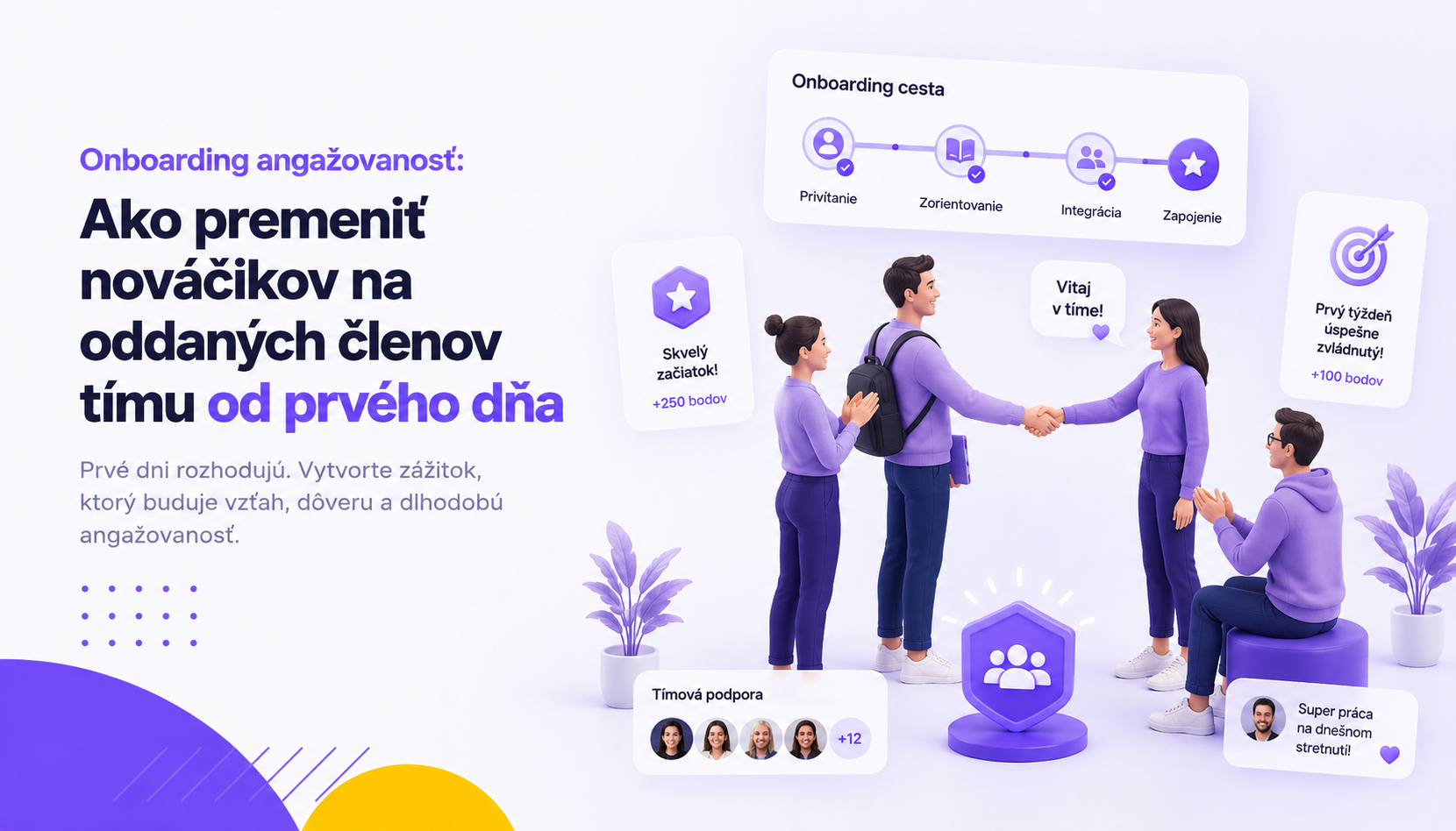
Onboarding Engagement: How to Turn New Hires Into Committed Team Members from Day One
June 9, 2026
The first 90 days at a new job are more critical than most companies realize. Research shows that employees who experience a structured, engaging onboarding process are 58% more likely to remain with the company after three years. Yet most onboarding programs focus almost entirely on paperwork, policies, and product tours — completely ignoring the human side of starting somewhere new. Onboarding engagement is not a nice-to-have. It is one of the highest-leverage investments you can make in your people.
Why Onboarding Is an Engagement Issue
Most HR leaders think about onboarding as a logistics problem: get the laptop ready, set up accounts, schedule orientation. These steps matter, but they are table stakes. The real onboarding challenge is emotional and social. New employees are asking themselves three silent questions: Do I belong here? Does my work matter? Is this company what I thought it was?
When organizations fail to answer these questions in the first few weeks, they create anxiety, disconnection, and early disengagement. According to Gallup, only 12% of employees strongly agree their company does a great job onboarding. That is a staggering gap between opportunity and execution — and it costs companies real money. Replacing an employee can cost up to 2x their annual salary when you factor in recruiting, training, and lost productivity.
The 5 Pillars of Engaging Onboarding
- Clarity and direction — New hires need to understand not just their role, but how it connects to the company's mission. Set 30-60-90 day goals collaboratively and revisit them often.
- Connection and belonging — Assign a buddy or peer mentor, introduce new hires to cross-functional colleagues, and create informal social moments in the first week. Belonging is built in small moments, not big events.
- Culture immersion — Do not just describe your values in a slide deck. Show them in action. Share real stories of how the team lives your values, and recognize new hires publicly when they embody them.
- Continuous micro-feedback — Replace the 3-month review with weekly micro check-ins. Ask how the new hire is feeling, what is confusing, and what could be better. This normalizes feedback from day one.
- Celebrating early wins — Recognize even small contributions during the first weeks. Public recognition from a manager or a peer in the first 30 days is one of the strongest predictors of long-term engagement.
Common Onboarding Mistakes That Kill Engagement
- Information overload on day one. A firehose of tools, processes, and policies is overwhelming and forgettable. Spread information over the first 2–4 weeks and prioritize context over completeness.
- No buddy or mentor system. New hires without a dedicated go-to person report significantly higher anxiety and slower ramp-up. A structured buddy system pays for itself within weeks.
- Treating onboarding as an HR-only task. Engaging onboarding requires managers, team leads, and peers — not just the HR team. Every stakeholder has a role in making someone feel welcome and prepared.
- Waiting too long to give meaningful work. Giving a new hire something real to contribute — even a small project — in the first two weeks dramatically improves their sense of purpose and belonging.
- Skipping regular check-ins. Without structured touchpoints at 30, 60, and 90 days, problems go unspoken until it is too late. Micro-feedback loops catch issues before they become resignation letters.
How to Measure Onboarding Engagement
You cannot improve what you do not measure. These are the most valuable signals to track during the onboarding phase:
- eNPS at 30, 60, and 90 days — a single-question pulse survey to track whether new hires would recommend working here.
- Micro-feedback response rates — low participation is itself a signal of disengagement or psychological discomfort.
- Time to first meaningful contribution — how quickly does a new hire ship something, close a ticket, or deliver real value?
- 6-month and 12-month retention rates by cohort — track whether onboarding improvements actually reduce early attrition.
How Kudosky Turns Onboarding Into a Momentum Builder
Kudosky is built to make the human side of work visible and actionable — and that starts on day one. With Kudosky's micro-feedback feature, managers can run brief weekly check-ins automatically, giving new hires a safe channel to share what is working and what is not, without waiting for a formal review.
Peer recognition is built into the product, so teammates can acknowledge a new hire's contribution publicly within seconds — the kind of moment that signals 'you matter here' before someone fully finds their footing. KAIA, Kudosky's AI copilot, surfaces patterns across the onboarding cohort, alerting managers when a new hire shows early signs of disengagement or confusion.
Onboarding is not a process — it is a promise. And every interaction in the first 90 days either reinforces or erodes that promise. If you are ready to make your onboarding experience as human as your hiring process, start your free trial at kudosky.app/auth/signup or book a personalized demo at calendly.com/hello-kudosky/kudosky. The first 90 days are too important to leave to chance.