
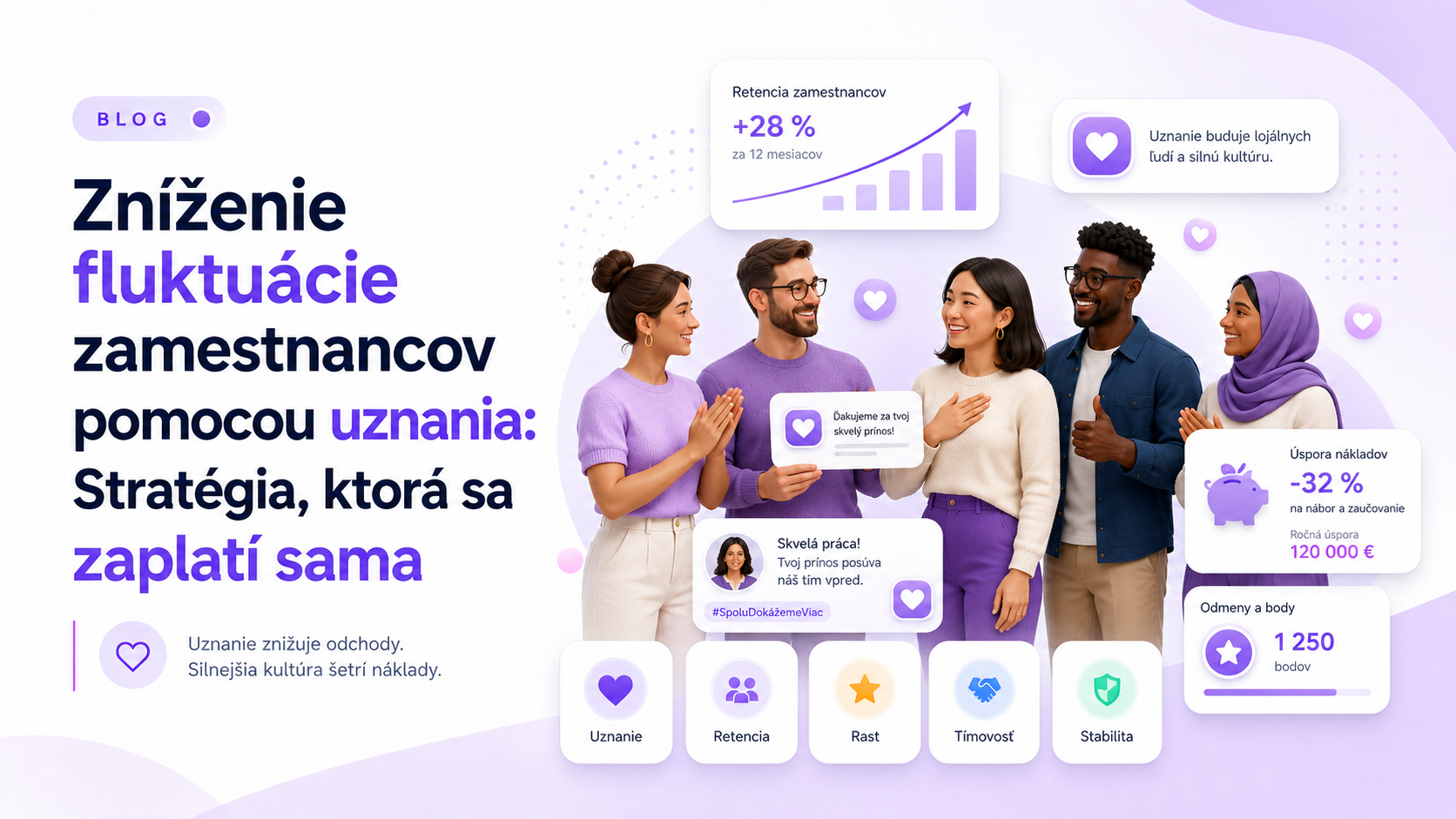
Reducing Employee Turnover with Recognition: The Strategy That Pays for Itself
July 23, 2026
Employee turnover is one of the most expensive problems a business can face. Industry research puts the cost of replacing an employee at anywhere from 50% to 200% of their annual salary — depending on their role and seniority. And yet, many companies continue to underinvest in one of the simplest, highest-ROI retention strategies available: employee recognition.
The Real Cost of Employee Turnover
Before we talk about solutions, let's make sure we're looking at the full picture. When an employee leaves, the visible costs are just the beginning:
- Recruiting and advertising costs
- Time spent reviewing applications and conducting interviews
- Onboarding and training for their replacement
- Lost productivity during the vacancy and ramp-up period
- Reduced morale and potential domino effect on remaining team members
Studies by SHRM and Gallup consistently show that organisations with above-average employee engagement experience turnover rates 40–59% lower than their peers. The connection between how valued employees feel and how long they stay is not a soft metric — it's a bottom-line driver.
Why Recognition Works as a Retention Tool
Employee recognition taps directly into one of our most fundamental human needs: the desire to feel seen and appreciated. When people know their work matters and that their contributions are acknowledged, they are far more likely to stay — even when competing offers arrive. Here is what the research tells us:
- Employees who feel recognised are 45% less likely to leave their jobs within two years (Workhuman/Gallup).
- 63% of employees who feel they are not recognised say they are likely to quit in the next 3–6 months (Deloitte).
- Companies with strong recognition cultures report 31% lower voluntary turnover (SHRM).
- Peer recognition is found to be more meaningful than manager-only recognition in over 50% of cases.
Recognition does not have to come from the top down. In fact, organisations where recognition is embedded horizontally — between peers — tend to see the strongest engagement and retention results. When recognition becomes a shared habit rather than a managerial checkbox, something powerful shifts in the culture.
Building a Recognition-Driven Culture
Creating a recognition culture is not a one-time project. It is an ongoing commitment to making people feel seen at every level of your organisation. Here is where to start:
- Make it frequent and specific: Vague praise has limited impact. Recognition tied to a specific action or behaviour lands far deeper and feels more genuine.
- Make it public: Public recognition creates a ripple effect — it shows the whole team what good work looks like and signals that effort is noticed and valued.
- Enable peer-to-peer recognition: Tools like Kudosky allow team members to send real-time kudos to each other, making appreciation part of everyday work rather than a top-down event.
- Tie recognition to company values: When recognition is linked to the behaviours that matter most to your organisation, it reinforces culture and gives employees a clear sense of what success looks like.
- Make it easy: Friction kills habits. A simple, instant recognition tool that integrates with Slack or Microsoft Teams dramatically increases adoption and keeps the habit alive.
Measuring the Impact
One of the most important shifts for HR leaders is moving from thinking of recognition as a "nice to have" to treating it as a measurable business investment. Track these key indicators before and after implementation:
- Voluntary turnover rate (before and after implementing recognition)
- Employee Net Promoter Score (eNPS)
- Engagement survey scores
- Absenteeism rates
- Time-to-productivity for new hires
When these numbers improve — and they do improve with consistent recognition — the ROI becomes undeniable. If your average cost of replacing an employee is €15,000, and recognition reduces your annual turnover rate by just 10%, the savings speak for themselves.
Recognition Is Not a Cost — It's an Investment
The companies that treat recognition as a cost to be minimised end up spending far more on recruitment, training, and disengagement. The companies that invest in making their people feel valued enjoy lower turnover, higher performance, and stronger cultures that attract the best talent.
Recognition, done right, is one of the highest-leverage moves available to any HR team. It does not need to be complex or expensive to be effective. It just needs to be consistent, genuine, and built into the way your team works every day.
Ready to see what a recognition culture looks like in your organisation? Start for free at Kudosky or book a personalised demo and transform your team's culture today.