
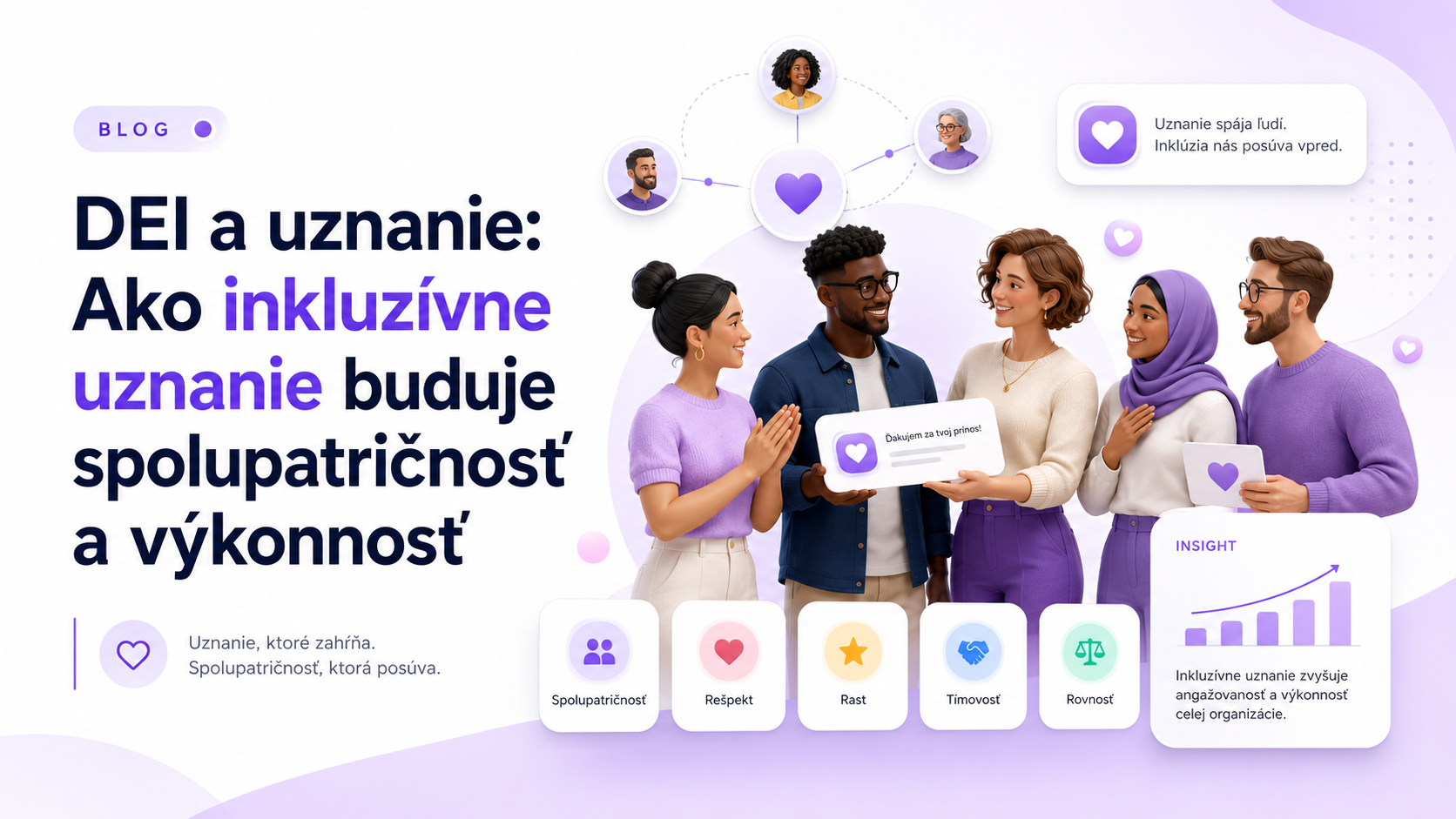
DEI and Recognition: How Inclusive Recognition Drives Belonging and Performance
July 28, 2026
Diversity, Equity, and Inclusion (DEI) has moved from corporate checkbox to business imperative. But many organisations still treat recognition as an afterthought — a top-down, manager-driven gesture that inadvertently favours those who are already visible. The result is a recognition gap that quietly undermines the very belonging DEI initiatives aim to create.
When recognition is designed with inclusion at its core, it becomes one of the most powerful tools for making every employee feel seen, valued, and motivated to contribute their best.
What Is Inclusive Recognition?
Inclusive recognition means acknowledging contributions in a way that ensures all employees — regardless of role, background, seniority, location, or identity — have equal opportunity to give and receive appreciation. It is the antidote to recognition deserts: pockets of the organisation where great work goes unnoticed simply because the right manager was not watching.
Traditional recognition systems are often unintentionally biased in three key ways:
- Visibility bias: Remote workers and introverts are recognised less than their office-based or outspoken peers.
- Affinity bias: Managers tend to notice and reward people who are most similar to themselves.
- Seniority bias: Senior employees accumulate recognition while frontline and junior workers are consistently overlooked.
Inclusive recognition actively counters these biases by democratising who can give recognition and making it easy for anyone to spot and celebrate great work wherever it happens.
Why DEI and Recognition Must Go Together
Recognition is an emotional event. When done well, it signals: you belong here, and your contribution matters. When done poorly — or not at all — the silence communicates the opposite message. For employees who are already navigating feelings of not being fully seen or heard, that silence lands harder.
Research from Gallup shows that employees who feel their work is not recognised are twice as likely to quit within the next year. Organisations that build inclusive recognition cultures, by contrast, consistently report:
- Higher engagement scores across all demographic groups.
- Stronger feelings of psychological safety that allow people to speak up and take risks.
- Lower voluntary turnover, especially among diverse and underrepresented talent.
- A self-reinforcing culture of appreciation where recognition inspires more recognition.
Four Principles for Building Inclusive Recognition
1. Democratise recognition — make it peer-to-peer. Do not leave recognition solely in the hands of managers. Peer-to-peer recognition gives every employee a voice and surfaces great work that managers might miss. When anyone can recognise anyone, visibility biases shrink dramatically.
2. Make it timely and specific. Vague praise — 'great job!' — means far less than specific acknowledgement tied to a concrete behaviour or outcome. Specific recognition is harder to dismiss and far more likely to feel genuine.
3. Connect recognition to values, not just results. Behaviours that support inclusion — mentoring a colleague, helping a non-native speaker, stepping up for a struggling teammate — are often invisible in outcome-focused cultures. Tying recognition to company values makes space for these contributions to be celebrated.
4. Use data to audit your recognition culture. Are certain teams, roles, or demographics being recognised far less than others? Regular data analysis reveals blind spots and gives HR leaders the evidence they need to intervene before the gap becomes a retention crisis.
The Role of Technology in Inclusive Recognition
Modern recognition platforms are built to democratise appreciation. With tools like Kudosky, recognition flows in every direction — peer-to-peer, bottom-up, and cross-functional — not just top-down. Public recognition feeds, value-based kudos, and analytics dashboards help HR teams spot and close recognition gaps before they become cultural problems.
Automated prompts can remind managers to recognise employees who have not received acknowledgement recently. Analytics can flag whether recognition is distributed fairly across locations, departments, or tenure levels. Integration with tools like Slack and Microsoft Teams means recognition happens in the natural flow of work — no extra effort required.
From Initiatives to Culture
DEI programmes often focus on hiring policies and structural interventions. But belonging is built in everyday moments — a shout-out on a team call, a written note of thanks, a public kudos post. When those moments are frequent, equitable, and specific, they compound into a culture where diverse talent does not just join your organisation; they stay, grow, and thrive.
The business case is clear. The tools exist. What is needed is intention — a commitment to recognising contribution in a way that genuinely includes everyone, every day.
Start Building an Inclusive Recognition Culture Today
Kudosky makes it easy to launch a peer recognition programme where every employee has a voice and every contribution gets seen. Try it free at kudosky.app/auth/signup or book a personalised demo at calendly.com/hello-kudosky/kudosky.